- Degrees
-
B.A., Columbia University, New York, NY (1989)
PhD., Kent State University, Kent, OH (1994) - Areas of Expertise and Research Interests
-
Aquatic Biology, Conservation, Environmental Science, Evolution, Ichthyology, and Science Education
- Licenses and Certifications
-
2022 Robert Lauderdale Award for Outstanding Contributions in Water Quality
2015 Teacher of the Year for Thomas More College
2011 “Big Brother of the Year” for Greater Cincinnati, Big Brothers and Big Sisters Organization
2005 “40 Under Forty” Award, Cincinnati Business Courier
2000 Teacher Leadership Northern Kentucky
1999 Teacher of the Year for Thomas More College
1997 Faculty of the Month-Thomas More College
1995 Teacher of the Month-Thomas More College
1993 Graduate Teaching Fellowship-Kent State
1992 Outstanding Graduate Student Teaching Award-Kent State
1991 Outstanding Graduate Student Research Award-Kent State
- Publications
-
Lorentz SQ, Trimpe ST, and CN. Lorentz. 2024. Fish Host Analysis of the Painted Creekshell, Cambarunio taeniatus.
Ellipsaria. 2024 October 01; 26(2):23-25.
Audrey Laiveling, Christopher N. Lorentz, and Michael T. Booth. 2023. River connectivity increases the
diversity of fish communities in gravel pit lakes. Transactions of the American Fisheries Society: 152(1) DOI:10.1002/tafs.10417
Shortlidge, E. Alison Jolley, Stephanie Shaulskiy, Christopher Lorentz, Emily Geraghty Ward, and Kari O'Connell. 2021.
A Resource for Understanding and Evaluating Outcomes of Undergraduate Field Experiences. Life Sciences Education. Ecology and Evolution. Dec; 11(23): 16387–16408
Swing, K., Elizabeth Braker, Peggy Fiedler, Ian Billick, Christopher Lorentz, and David Wagner. 2021. Growing
Threats to the Scientific and Educational Legacies of Research Stations and Field Courses. BioScience, Volume
71, Issue 3, March 2021, Pages 213–215
Lorentz, C. N., D. T. Saalfeld, and S. T. Saalfeld. 2006. Status and changes of Ohio River fish assemblages around
William H. Zimmer Power Plant, Moscow, Ohio. J. Ky. Acad. Sci. 67:39-46.
Ferner, John W., Christopher Lorentz, Melissa Obermeyer and Paul Krusling. 2000. Geographic Distribution. Apalone
spinifera spinifera. Herpetol. Rev. 31(1): 51.
Lorentz, Christopher and John W. Ferner. 1999. Geographic Distribution. Chelydra serpentina. Herpetol. Rev. 30(2):
108.
- Additional Information
-
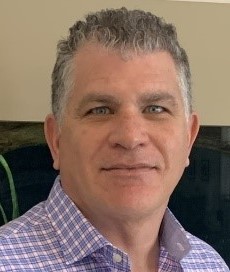
Dr. Lorentz begin working at Thomas More University in 1994, serving as Professor of Biological Sciences and Director of the Environmental Science Program. He teaches a variety of classes including Aquatic Biology, Invertebrate Zoology, and General Biology, among others. In 1999 and in 2015, he received the award for the Outstanding Full-Time Teacher of the Year. He has been awarded several teaching grants focusing on the improvement of science education through STEM outreach program to local K-12 schools, including field trips, summer camps and teacher workshops. Dr. Lorentz also serves as the Director of the University’s Ohio River Biology Field Station. At the Field Station, he collaborates closely with the EPA, Fish and Wildlife Services and other agencies on the restoration and protection of the Ohio River Basin. His research focuses on bioassessments of aquatic ecosystems, conservation of threatened & endangered species, and ecotoxicology. Most recently, he has established a mussel propagation system at the University’s Biology Field Station, with the goal of identifying fish hosts for mussel larvae and breeding adult mussels with the aim of restoring natural populations.
In 2025, Chris was elected as Chair of the Ohio River Basin Alliance, a non-profit organization working to set water resource priorities for the Ohio River Basin, to sustain healthy ecosystems and communities, and improve our water-dependent economies. He was a former Chair of the WAVE Foundation at the Newport Aquarium and Past President of the Organization of Biological Field Stations, an international society comprising over 225 member stations from 20 countries and six continents that focuses on environmental research and public understanding of science.
Courses Taught: Aquatic Biology, Evolution, General Biology, Inquiry into Science Education, The History of the Ohio River and The Natural History of Australia
Research Interests: The bioassessment of aquatic ecosystems using fish and macroinvertebrate communities. These biological data, along with physical and chemical parameters, can be used to assess water quality and the ecological health of the aquatic systems in which the communities live.
- Employee Roles
-
Departments Positions Titles Biological Sciences Faculty Professor Biology Field Station Director Director of Biology Field Station